The Half Marathon World Record Is Now 56:51
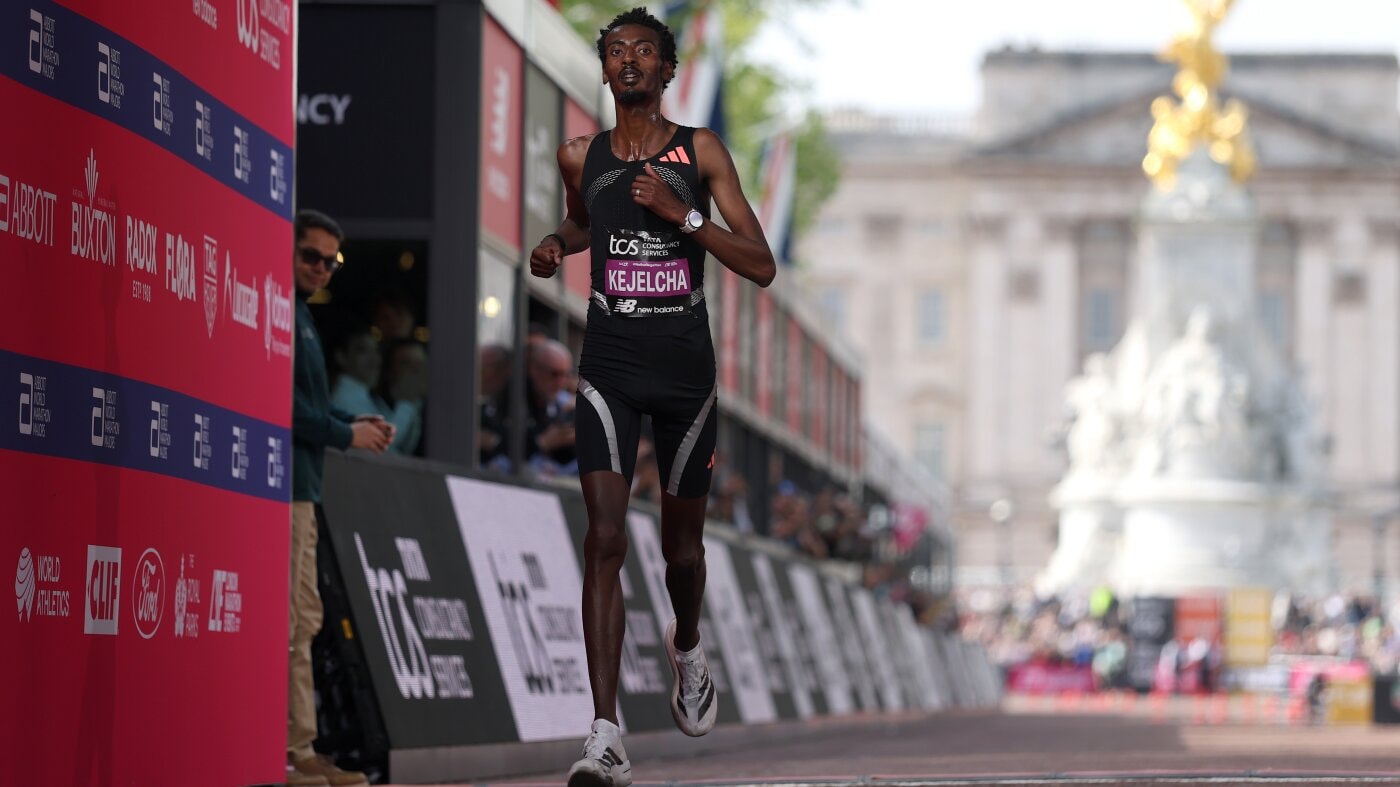
Yomif Kejelcha went through 10km in 27:19, dropped the entire field at kilometer seven, and finished the Buenos Aires half in 56:51. That’s 29 seconds off Jacob Kiplimo’s record and the first time a man has gone under 57 minutes in a race that counts. The strange part: he got faster once he was alone.
Sunday morning in Buenos Aires, 31,500 people on the start line of the Media Maratón Ciudad de Buenos Aires. One of them covered 13.1 miles at 4:20 per mile.
Kejelcha is 29, Ethiopian, and he’d already held this record once. He set it in Valencia in October 2024 at 57:30, lost it to Kiplimo this spring, and just took it back by a margin that makes his own old mark look slow.
He’s also in the middle of an absurd year. Back in April he ran 1:59:41 on his marathon debut in London, second behind Sabastian Sawe and the quickest debut anyone has ever run. Four months later he owns the half marathon record too.
What happened in Buenos Aires
He didn’t wait around. Through 5km in 13:34 with the lead group still attached, then at kilometer seven he went, with more than 14 kilometers left to run. Nobody went with him.
His 10km split was 27:19. Worth noting that this was actually 19 seconds slowerthan Kiplimo’s 10km split on the way to his 57:20 in Lisbon. So through a third of the race, Kejelcha was behind record pace and running by himself.
Then he ran the last 11.1 kilometers in about 29:32, roughly 2:40 per kilometer. Faster than his first half. Alone, on empty road, with nobody to chase and nobody chasing him. That’s the bit that’s hard to get your head around.
In the women’s race, Ethiopia’s Fotyen Tesfay won in 1:03:57, well clear of Nevin Can in 1:05:06.
The 56:51 still has to clear the standard World Athletics ratification process, which is not a formality in this event, as the next section explains.
What 56:51 actually means
Times at this level go a bit abstract, so here it is in units that mean something. 56:51 for a half marathon is about 2:42 per kilometer, or 4:20 per mile, held for 13.1 miles.
On a track that’s 65 seconds a lap. Fifty-three laps of it, back to back, no break. A lot of very fit people can hit one 65-second lap on a good day and are fully cooked at the end of it. He did that fifty-three times and sped up.
The sub-57 asterisk nobody mentions
Most headlines today are saying first man under 57 minutes. That needs one line of context, because it isn’t quite the same as fastest ever.
In February 2025 in Barcelona, Jacob Kiplimo ran 56:42. Nine seconds quicker than what Kejelcha just did. World Athletics declined to ratify it after ruling that Kiplimo had picked up the slipstream of a car driving ahead of him on the course.
So both things are true. The fastest half marathon anyone has ever run is 56:42, and the half marathon world record is 56:51. Kejelcha is the first man under 57 minutes in conditions that qualify for the record, which is a real distinction and a narrower claim than the headline version.
How the record moved
Three ratified marks in under two years, and two of the three are Kejelcha’s.
Kiplimo’s 56:42 isn’t in there on purpose. It’s faster than every line in the table and it never entered the record chain.
The women’s record is still Gidey’s
While the men’s record has changed hands three times since late 2024, the women’s hasn’t moved at all. Letesenbet Gidey ran 1:02:52 in Valencia in October 2021 and no woman has been under 63 minutes before or since. Coming up on five years, which in this era of the sport is a long time for anything to stand.
The other 31,500
The number I keep coming back to isn’t 56:51. It’s 31,500. That many people ran the Media Maratón Ciudad de Buenos Aires on Sunday. Kejelcha’s world record and somebody’s first ever 2:40 half happened on the same streets, on the same morning, at the same race.
I ran my first half in May. Nowhere close to any of this, and I’m not going to dress the gap up as inspiring when it’s just enormous. A 56:51 takes genetics, altitude, a decade of work and a life where training isthe job. That’s worth admiring on its own terms without turning it into a measuring stick for a Tuesday evening run squeezed in after work.
Watch the record, it’s a hell of a thing. Then go do your 40 minutes. Both of those are running.
If Buenos Aires put a start line in your head, the open entry race picks are races you can sign up for right now with no qualifier and no lottery, and a no-drop run club is the lower-stakes way in if a bib feels like a lot.
What is the half marathon world record?
56:51, run by Ethiopia's Yomif Kejelcha at the Media Maratón Ciudad de Buenos Aires on August 23, 2026. It took 29 seconds off the 57:20 Jacob Kiplimo ran in Lisbon in March, and it goes through the usual World Athletics ratification process before it is official.
Has anyone run a half marathon faster than 56:51?
Yes. Jacob Kiplimo ran 56:42 in Barcelona in February 2025, which is still the fastest half marathon anyone has run. World Athletics never ratified it, ruling that he had benefited from the slipstream of the lead car. So the fastest half ever run and the world record are two different times.
What is the women's half marathon world record?
1:02:52, set by Letesenbet Gidey in Valencia in October 2021. She is still the only woman to have gone under 63 minutes, and that record has now stood for nearly five years.
What pace is a 56:51 half marathon?
About 2:42 per kilometer, or 4:20 per mile. Put it on a track and it is roughly 65 seconds per lap, held for about 53 laps in a row without a break.
What is a good half marathon time for a regular runner?
Most people finish somewhere between two hours and two and a half, and first-timers are usually past that. The elite record is a different sport, not a scoreboard you’re on. If you want a start line of your own, our open entry race picks list races you can register for today.